What ethnic groups live in Mu Cang Chai? Mainly Mong people – accounting for more than 90% of the population, famous for their terraced fields, leaf pipes, brocade skirts and traditional festivals. There are also Thai, Tay, Dao ethnic groups, creating a rich cultural identity for this Northwestern highland region.
1. Where is Mu Cang Chai?
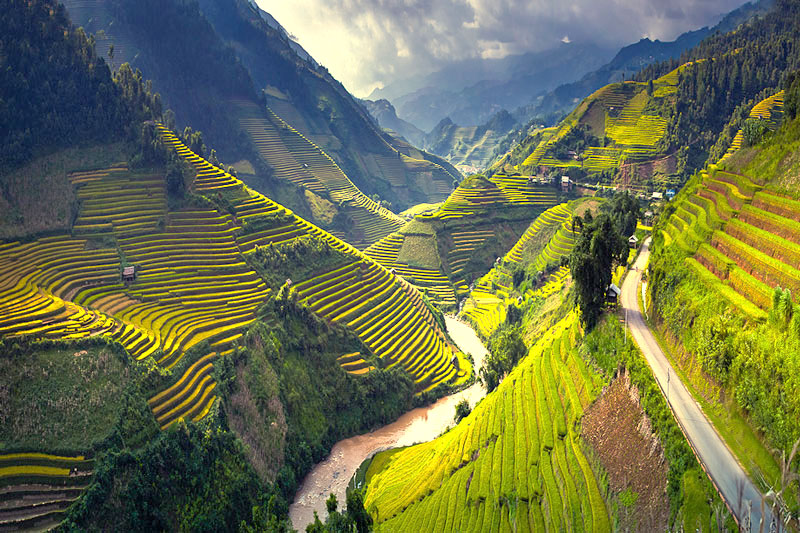
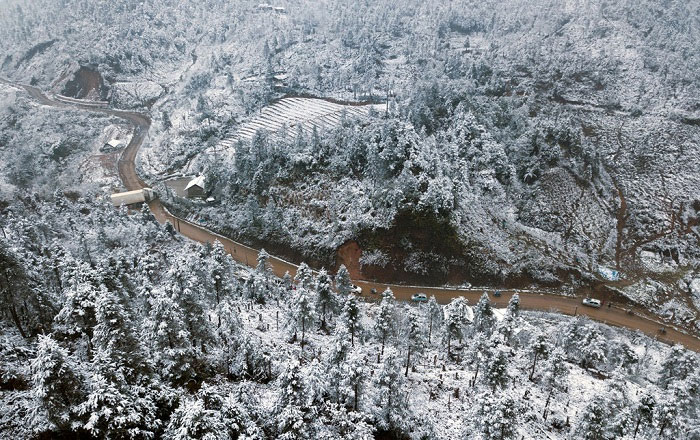
Mu Cang Chai was formerly a highland district located in the West of Yen Bai province, in the Northwest region of Vietnam. It is nestled at the foot of the majestic Hoang Lien Son range, about 300 km from Hanoi along Highway 32, through spectacular mountain passes such as Khau Pha Pass – one of the famous “four great mountain passes”. With an average altitude of 1,000 to 2,000 meters above sea level, the climate in Mu Cang Chai is cool all year round, home to the Mong people, where the terraced fields winding around the mountainside have become a must-see tourist symbol every autumn.
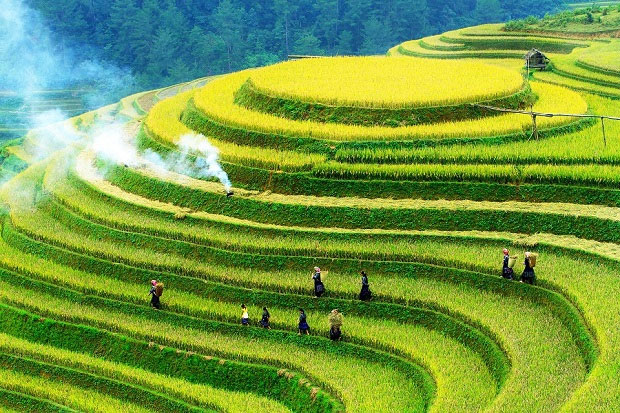
The beauty here comes not only from the majestic nature, but also from the simplicity and rusticity in the culture and people of the highlands.
2. What ethnic groups are there in Mu Cang Chai?
Mu Cang Chai is not only famous for its majestic terraced fields, but also a place where many cultural colors intersect. This place is the “common roof” of ethnic minorities such as Mong, Thai, Tay, Dao ,…
2.1. Mong people
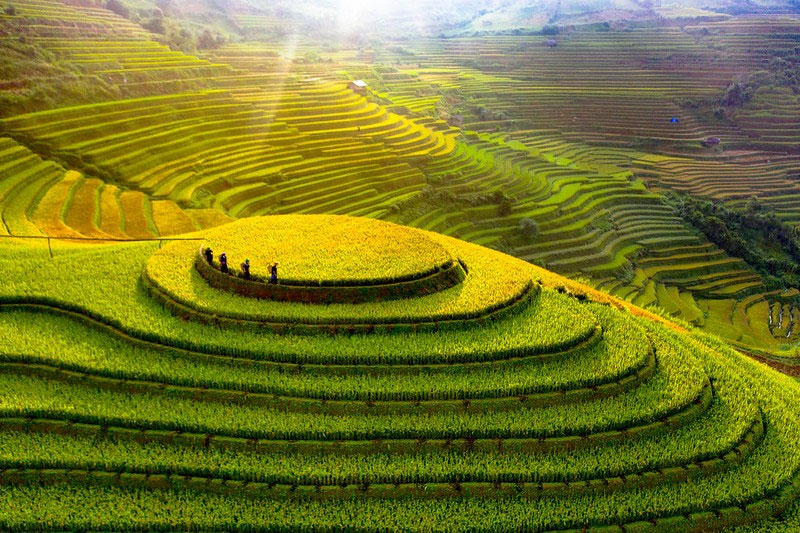
The Mong people are the majority ethnic group in Mu Cang Chai, accounting for 90% of the population and they are also the ones who reclaimed, cared for, and transformed the mountain slopes into beautiful winding rice terraces. They live scattered in highland communes such as La Pan Tan, Che Cu Nha, De Xu Phinh, etc. The Mong people are the owners of the famous terraced fields and are also the community that preserves many traditional cultural features such as brocade embroidery, weddings, Gau Tao festival, Tet Rieng, etc.
2.2. Thai people
The Thai people live scattered in low-lying areas and valleys such as Tu Le, Lim Thai village, etc. with a culture imbued with rivers and plains. They live in airy stilt houses, know how to grow rice, raise fish, make terraced fields and weave elaborate brocade. The traditional costume of the Thai people is a long dark skirt, a tight shirt and a charming Pieu scarf. During festivals or social nights, the graceful xoe dance and the bustling sound of drums and gongs are always the highlights that captivate visitors. The Thai people are famous for traditional dishes such as grilled fish, five-color sticky rice, and cham cheo. Each ethnic group has its own unique features, contributing to creating a Mu Cang Chai that is both simple and colorful with the culture of the Northwest mountains and forests.
2.3. Tay people
Although the Tay people make up a smaller proportion, they still contribute to the cultural diversity of the Mu Cang Chai highlands. They often live in villages along streams, with typical stilt house architecture, and a peaceful life closely connected to the forest and farming. The Tay people have many folk tales, then songs, and profound luon melodies, reflecting a rich and delicate soul.
2.4. Dao people
The Dao people in Mu Cang Chai mainly belong to the Red Dao group, with elaborate traditional costumes meticulously hand-embroidered, and prominent red headscarves. The Dao people are good at farming, growing medicinal herbs, and are famous for their village worship customs, the coming-of-age ceremony, and the traditional herbal bath – a cultural feature associated with spiritual life and health.
3. What are the unique traditional cultural features in Mu Cang Chai?
3.1. Gau Tao Festival
Gau Tao Festival is one of the most unique festivals of the Mong people in Mu Cang Chai, usually taking place in early spring, from the first to the fifteenth of January. This is a ceremony to pray for blessings, luck, health and a bountiful harvest for the whole community. In the bustling atmosphere, people dance together, play flutes, throw pao, play tops… creating a picture of spring with brilliant traditional colors.
3.2. Mong people’s Tet
The Mong people’s Tet usually comes about a month earlier than the Lunar New Year, at the end of the twelfth lunar month. On this occasion, the Mong villages resound with the sound of panpipes and laughter, every family wraps sticky rice cakes, slaughters pigs, and decorates their houses. This is a time for reunion, to thank ancestors, and also an occasion for young men and women to wear new clothes and participate in folk games to find a partner.
3.3. Highland Market
The highland market in Mu Cang Chai is not only a place to exchange goods but also a unique cultural space of the Mong, Thai and other ethnic groups. The market is held every Saturday and Sunday, and is most crowded during the flood season and the rice harvest season. Here, you can easily see young women wearing colorful flared skirts, old people selling agricultural products, young people gathering to chat – all creating a colorful highland lifestyle.
3.4. Terraced Field Festival
The terraced field festival, held around September every year, is a major event within the framework of the Mu Cang Chai Cultural Tourism Week. This is an opportunity for locals to introduce traditional cultural beauty to tourists through performances of Mong flute, rice cake pounding contest, silver carving, beeswax carving, reenactment of farming processes on terraced fields, etc. Not only is it a festival, it is also a journey to explore the depth of culture and soul of the people here.